The Kotwel Knowledge Base
Ideas for building better data products.
Practical articles on data quality, human insight, AI systems, and the flywheels that turn learning into durable advantage.
Explore the library
Insights for better data products
Content
Layers
Explore
16 articles found
Học tăng cường cho robot
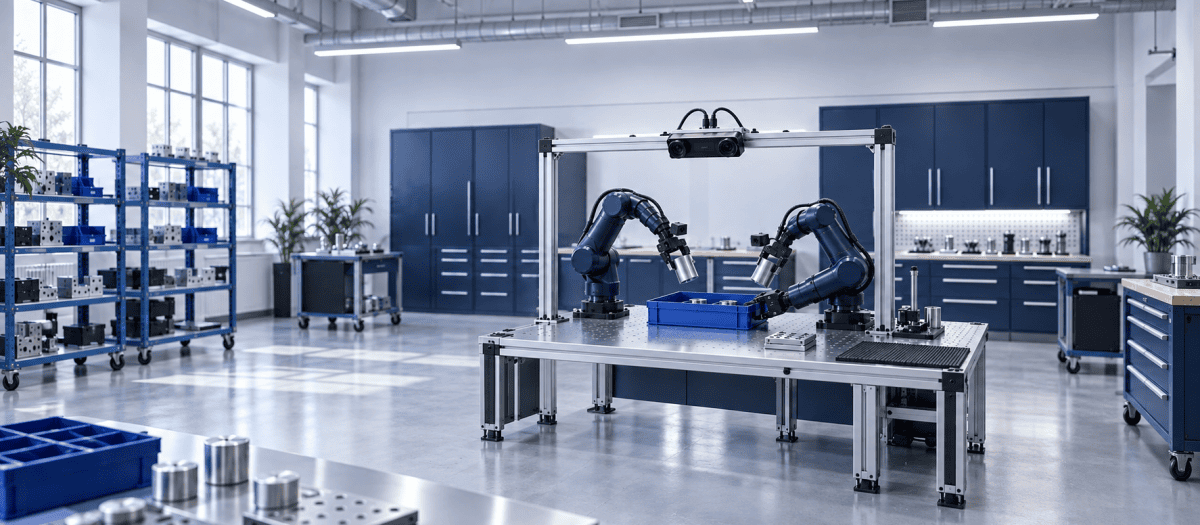
Cách phần thưởng biến trải nghiệm của robot thành một chính sách điều khiển, vì sao dữ liệu ngoại tuyến và mô phỏng giúp giảm chi phí tương tác phần cứng, và những chỗ học tăng cường vẫn thất bại trước tín hiệu thành công mơ hồ.
Reinforcement Learning for Robotics
How rewards turn robot experience into a control policy, why offline data and simulation reduce costly hardware interaction, and where reinforcement learning still breaks on ambiguous success signals.
Annotation Quality Assurance
How annotation quality assurance is measured and disclosed, why an IoU agreement check weakens on exactly the sparsest objects, and what an unwritten labeling convention costs that no benchmark score reveals.
Synthetic Data for Robotics
What a generated episode contains once its pixels or its actions come from a model rather than a sensor, why the mixing ratio against real data decides whether co-training helps, and where a corpus stops recording which episodes were measured.
Whole-Body Teleoperation
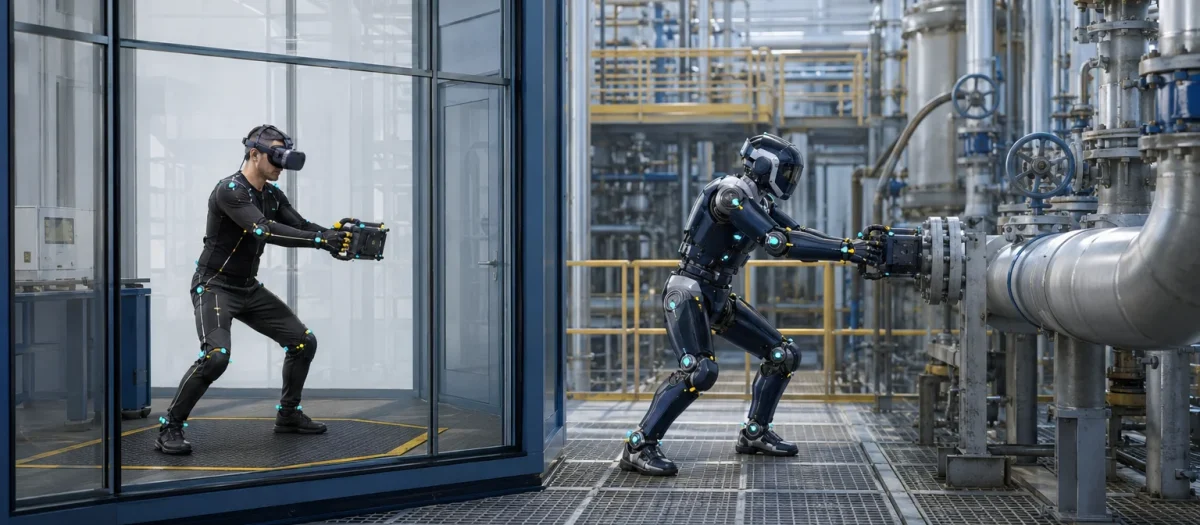
How a human operator's motion becomes a humanoid robot's joint commands, why VR headsets, IMU suits and optical motion capture each measure a different slice of the body, and why the resulting recording is usually the controller's output rather than the operator's raw intent.
Egocentric Data
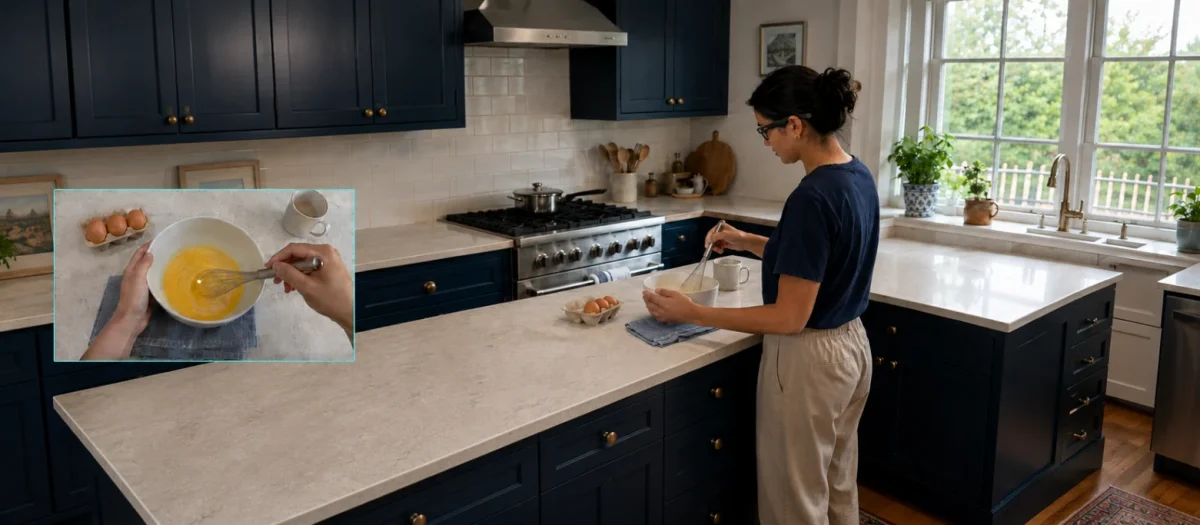
Where a camera attached to the actor changes what a recording can assert, what a single head turn does to an object's identity in the labels, and why the rule for frame exits has to be written before annotation starts.
Cross-modal Alignment
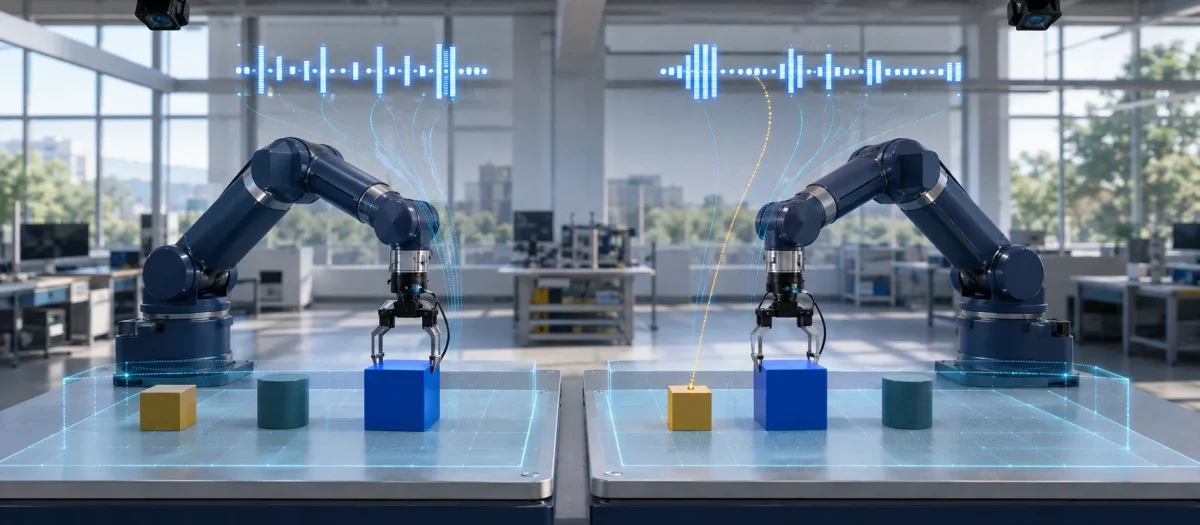
What has to hold before two modalities agree on which of their parts refer to the same thing, why a robot policy scores highly on instructions it is actively contradicting, and where that correspondence comes from the labeling rather than the architecture.